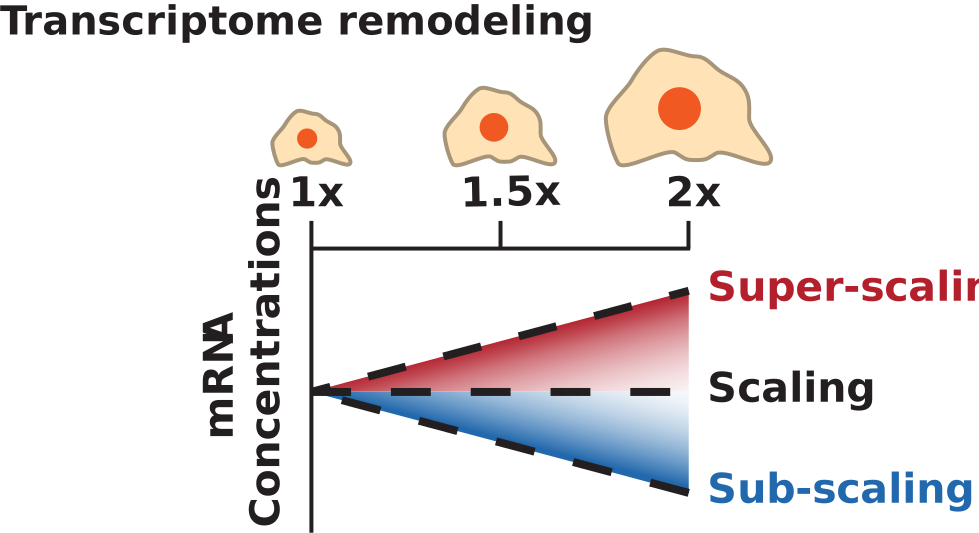
By systematically measuring each major step of the gene expression pathway — transcription, translation, mRNA turnover, and protein turnover — across a two-fold size range, we established that differential transcription is the dominant mechanism. Combined models explain 75% of size-dependent protein variation (R² = 0.75), with transcription accounting for nearly all of that explanatory power.
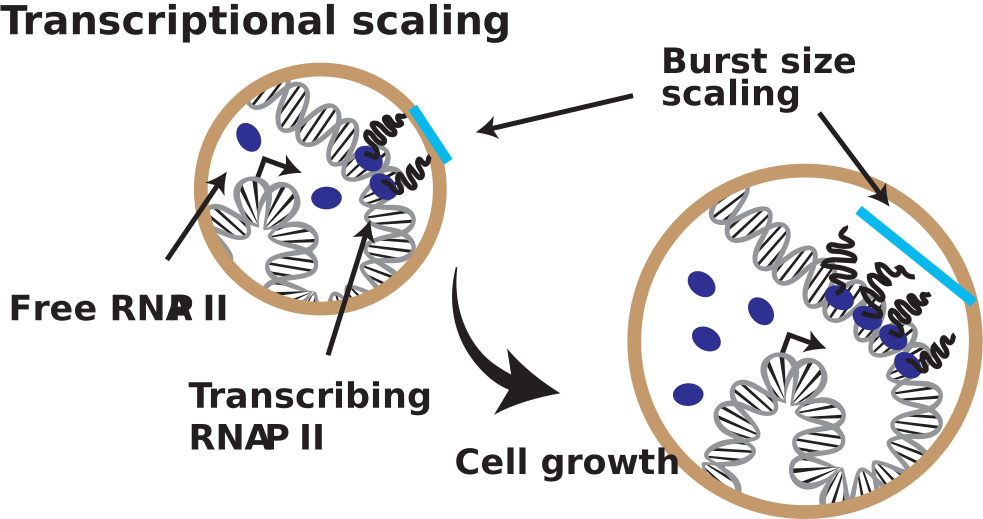
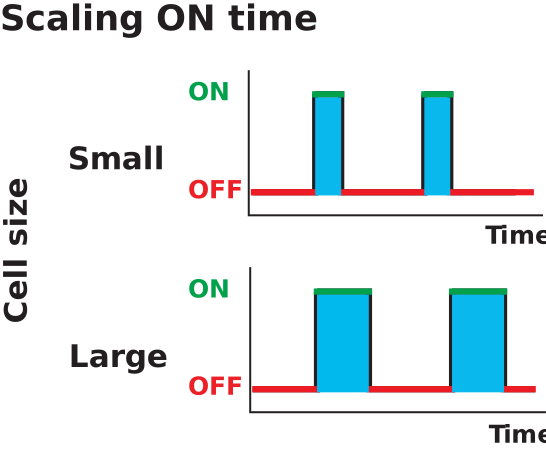
Endogenous live-cell MS2 imaging of the scaling genes RAB7A and RHOA showed that burst size increases with cell size. Decomposing burst size revealed that this is primarily driven by longer ON times — once a promoter is activated in a large cell, it remains active for a longer duration. Burst amplitude (the rate of RNA Pol II loading) and burst initiation rate were comparatively minor contributors. Inactive (OFF) periods were modestly shortened.
As cells enlarge, the genome is diluted relative to cell volume, reducing the DNA-to-cytoplasm ratio. We speculate that transcription factor concentrations remain higher relative to a fixed number of genomic binding sites, leading to greater promoter occupancy — analogous to the effect of MYC overexpression, which drives global transcriptional upregulation through increased burst size and ON time via changes in TBP, SPT5, and MED1 dwell times.
Unlike findings in budding yeast, we observed no correlation between basal mRNA expression level and size-slope direction in mammalian cells — ruling out the "transcriptomic inversion" model. Instead, differential scaling may be hardwired in the regulatory architecture of individual promoters, or driven by an upstream signaling cascade (resembling mTOR inhibition) that is triggered by genome dilution and reshapes the transcriptional landscape as a cell grows.
The disproportionate accumulation of lysosomal proteins in large cells reflects a broader pattern of biosynthetic imbalance. In contexts of extreme cell enlargement — such as following CDK4/6 inhibition — these lysosomal vulnerabilities may be clinically exploitable. Size-specific vulnerabilities have also been reported through IRF4 upregulation sensitizing myeloma cells to bortezomib, and GPX4-dependent ferroptosis susceptibility in iron-rich, large cells.