Larger cells scale transcription by prolonging burst duration
Live-cell MS2 imaging of RAB7A and RHOA genes showed that
burst size increases in proportion to cell size. Decomposing burst size revealed that this scaling
originates primarily from longer ON times — once activated, promoters in larger cells remain active for
longer. Burst amplitude stayed relatively constant, and inactive periods between
bursts were only modestly shortened.
mRNA concentrations are strongly size-dependent
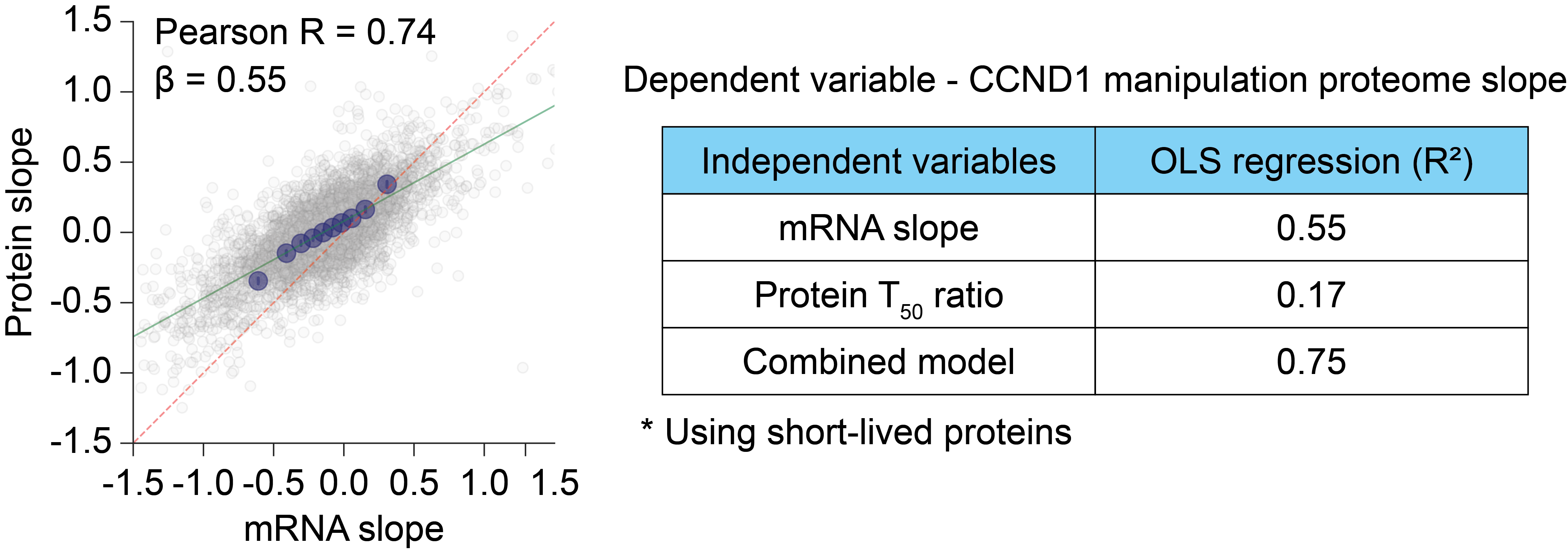
RNAseq of CCND1-manipulated cells yielded a Pearson R
of 0.74 between mRNA and protein fold changes across cell size — substantially higher than the R = 0.29
from earlier size-sorted experiments. Most of the explanatory power for protein concentration changes
comes from transcriptome changes rather than protein turnover.
mRNA turnover does not drive transcriptome remodeling
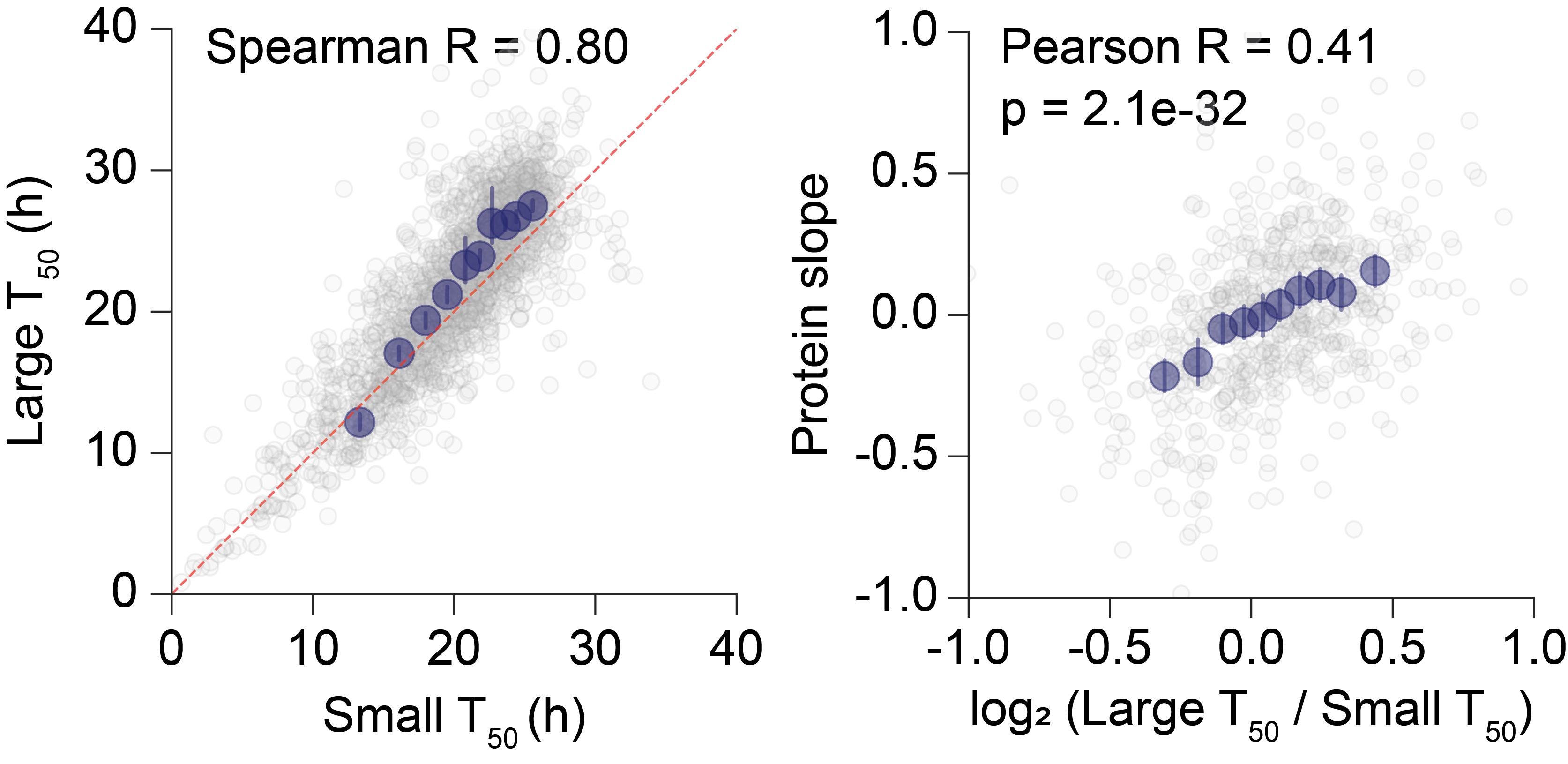
SLAMseq revealed that individual mRNA half-lives do not
differentially change across cell sizes. A mild global stabilization of mRNA was observed in larger cells
— consistent with a RNA concentration homeostatic mechanism seen in yeast — but this was uniform across
transcripts rather
than gene-specific, and did not correlate with mRNA size-slope values.
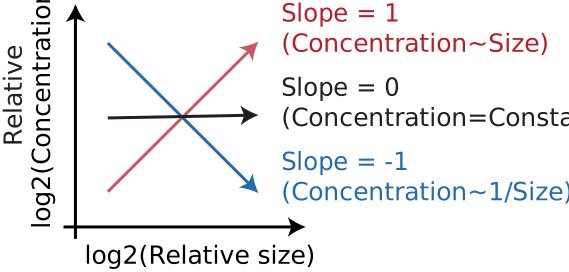
Protein concentrations scale proportionally with cell size
TMT mass spectrometry of CCND1 manipulated cells
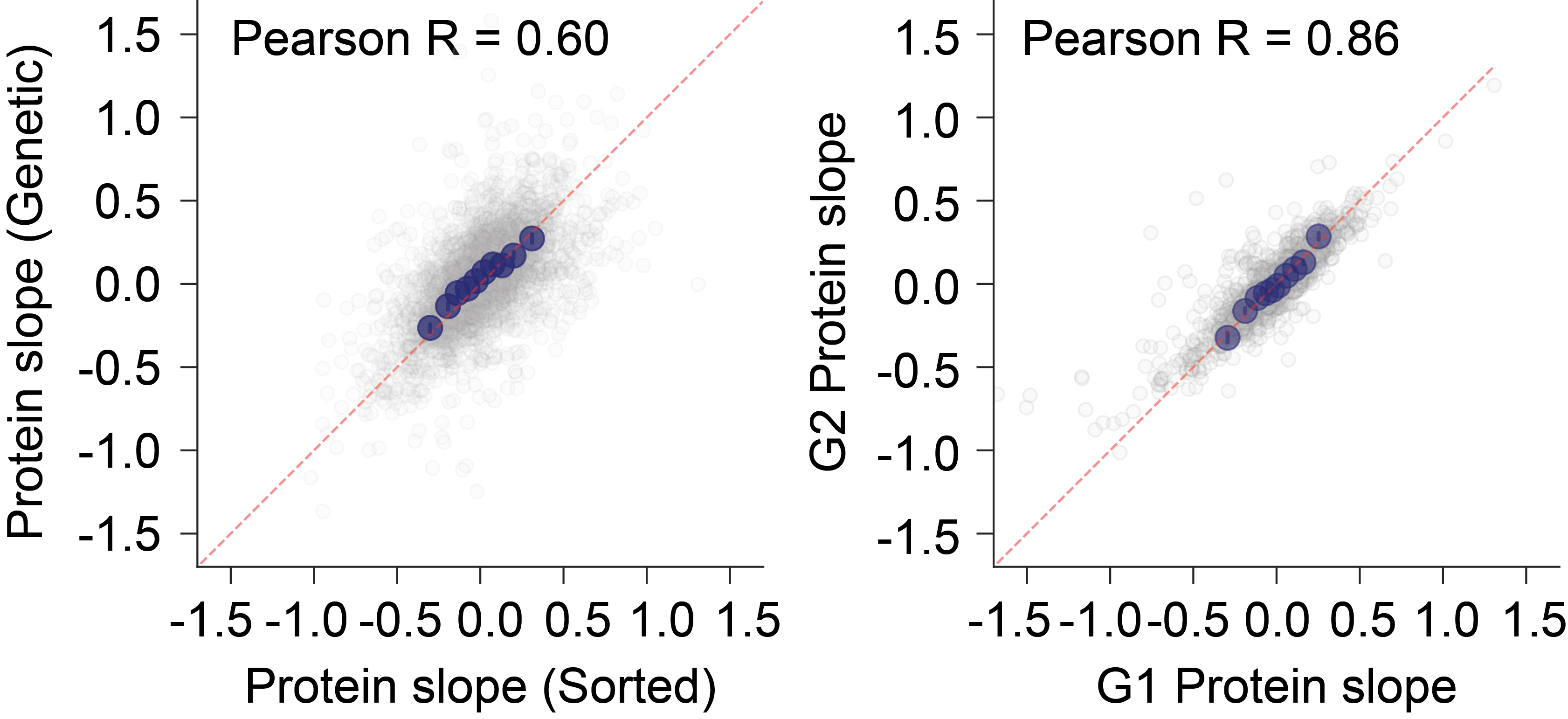
revealed that the majority of the proteome scales with cell size, as previously seen for size-sorted cells.
In addition, we also showed by sorting cells of different sizes and different cell cycle state that
this remodeling of the proteome is not strongly influenced by the cell cycle.
Protein turnover is largely size-independent
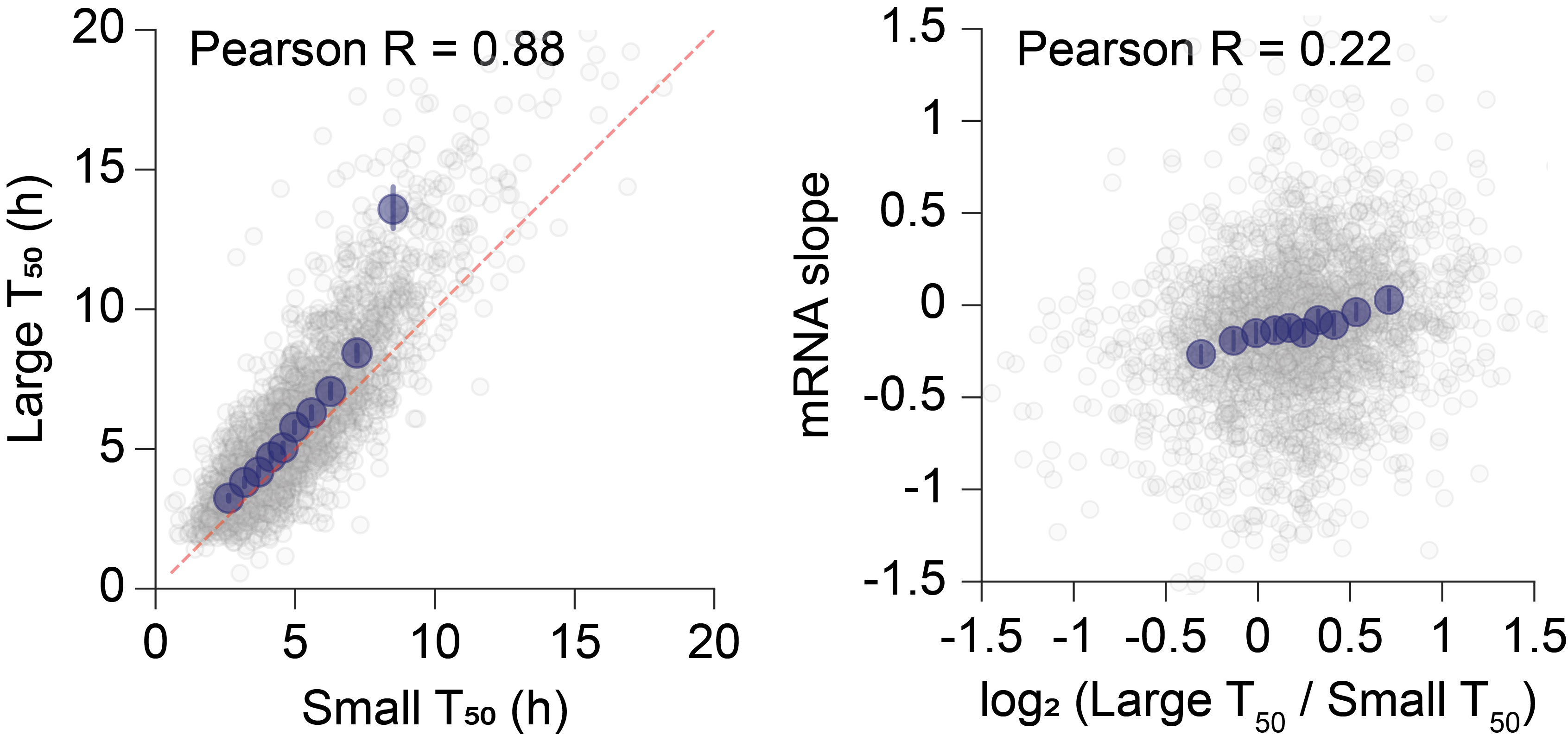
Pulse SILAC-TMT measurements showed that protein
half-lives are mostly constant across a two-fold cell size increase. For short-lived proteins, a small but
significant correlation with protein size-slope was found — meaning protein turnover for unstable proteins
may make a minor contribution to size-dependent proteome remodeling.
Large cells are specifically vulnerable to lysosomal damage
When lysosome function was challenged with LLoMe, large
cells showed significantly higher rates of cell death than small cells.
A longer treatment with chloroquine produced a similar, though more modest, size-dependent increase in
death.
This effect was specific to lysosomes — treatment with the proteasome inhibitor bortezomib produced
the opposite result, with smaller cells being more vulnerable.